
I like to think I know exactly what to do when someone dies. I’ve carefully studied Emily Post’s Etiquette and I follow the outlined steps. I attend funerals and I send sympathy cards. I try to be sensitive in my conversations with those who have suffered a loss. I’ve blogged about death and I thought I had some credibility as a comforter to the grieved.
Then I read Linda Andrews’ book Please Bring Soup.
Andrews wrote this book about the unexpected and devastating loss of her husband in September, 2011; he died just two weeks after the death of her father. Nothing could have prepared her for the emotions she experienced in the aftermath. Her book is a compilation of first person narrative, journal entries, correspondence, and guidance for those who find themselves among the grieving. Her writing style is telegraphic, with short bursts of emotion. She is honest and direct and says grief is a full-time job.
Early on in the book, she gives the following advice:
It is important to remember that when someone experiences loss, it becomes about them, not you.
This was the most important sentence in the book. When we weep with those who are weeping, we do it to sympathize with their pain. It’s really not about us.
In her chapter “What you Say or Do Not Say Hurts,” she provides this wonderful advice for what to say when you greet someone who is grieving:
“How are you,” is a normal everyday greeting, yet it can be very upsetting to hear when you are grieving. You just suffered a loss so how the heck do they think you are? It just does not make sense to people that are grieving.
She suggests a better alternative of “How is today going?” It’s subtle, but thoughtful and acknowledges that the person who suffered a loss might not be doing okay.
She also shares her feelings about the troublesome “let me know if there is anything I can do to help.”
While their intentions were good, it put the responsibility on me. So in my worst most terrible time, I have to think of something you can do and then call you and let you know what that is.
I had never thought about that simple sentence in this way before.
Later in the book, she reiterates this theme:
Friends and family make suggestions and you think; I cannot process what you are saying.
 One of my dear friends, Mary, lost her only son, Sean, to cancer. He was only 40 years old and although I never met him, I’ve heard so much about him in the years I’ve known Mary. In some small way, I feel like I do know him.
After reading Please Bring Soup, I sent Mary an e-mail and told her how the book made me think about the pattern of her own grief. She said:
This year has been very difficult for some reason. I just miss hearing Sean and just being able to call him and talk to him. He always had a way of making a gray day bright again. Perhaps that’s just a mother’s love but he was a witty guy who could always put a smile on your face no matter what. I miss having that.
Then she said something that I’ve also observed in my own experiences among the grief-stricken.
It is good that you read and it would be good for everyone to read such books but we in the US of A are afraid to talk about death and the effect of it on the people left behind.
Isn’t that true? We really don’t want to talk about death in our culture. We perk up if it’s a movie star or singer, but not so much when it’s our neighbor or co-worker. It might never be easy but I think you’ll find Linda Andrews’ book, Please Bring Soup, a practical guide to help those who are hurting.
You can buy it here.
 Thank goodness it was
 The prospect of this change is unsettling for me, but fortunately Handy has gently deconstructed things and reminded me that much of this is just “feelings.” Will I end up in a smart and sassy foreign auto? Or a new American ride?
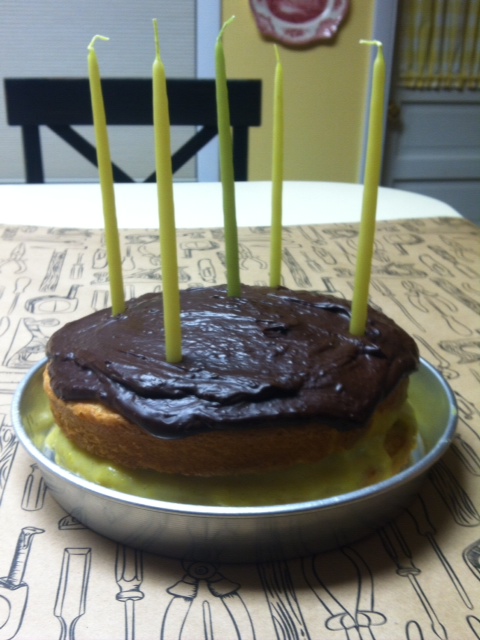 Handy told me that his mother, Evelyn, would make a Boston Cream Pie for his birthday. I bet it was a special day at his childhood home.
 It will take a strong cup of tea, a sweet bit of honey, and lot of acting to make it through the day.
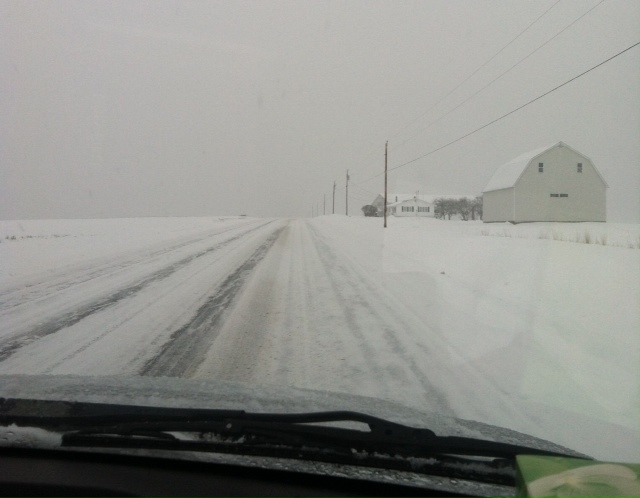
 I think I left a little bit of my heart in Aroostook County this week. It’s a wide-open place of beauty and wonder, desolate and stark at the same time. I’ll need to go back a few more times to earn my County credentials, but it’s necessary for anyone who wants to be a writer with a “voice of Maine.”
 I know we’re not all related, but sometimes the six degrees of AYUH is a little unnerving.