

I haven’t always been the volunteer coordinator at the Hampton Victory Garden. Cindy preceded me and she’s good at remembering the important things, like planting tulips. I’m glad she did.
Take a picture of a blooming tulip today!
I haven’t always been the volunteer coordinator at the Hampton Victory Garden. Cindy preceded me and she’s good at remembering the important things, like planting tulips. I’m glad she did.
Take a picture of a blooming tulip today!
I was inspired to write this three-part “Water Week” series while reading an article by Nancy Bubel in the July, 1988 Country Journal magazine titled “A Gardener’s Dirty Dozen.” Number four on the list of garden NO NO’s was “Watering often in small amounts.”
If you’re a wanna-be farmer currently trapped in a chicken coop sized condo like me, Nancy Bubel’s name might sound vaguely familiar. I walked over to my wanna-be farmer bookcase, pulled out my copy of Root Cellaring and there was Nancy’s name, right on the cover. She and her husband Mike wrote this popular and perennial guide to preserving the harvest in 1979.
Here’s what Nancy wrote in the July, 1988 Country Journal:
“That evening ritual of spraying the garden with the hose refreshes the gardener. But such watering encourages the plants to develop shallow roots and makes them dependent on regular, superficial doses of moisture. If plants are watered less often and more thoroughly, they develop longer roots to seek out deep soil moisture, and so are more likely to survive drought.”
When seeds are first planted, they like a morning and evening sprinkle to get them to germinate in a continually moist soil. The goal is to get the seeds to germinate as fast as possible. Once seedlings appear, the objective is deep watering, which means getting the soil wet to a depth of 4 to 6 inches. As most successful gardeners can confirm, developing strong and deep roots is important.
In a small garden, it’s easy to accomplish deep watering with a watering can, a little bit of energy, and some time. I enjoy walking in my little rows with my watering can swaying back and forth; I’ll be sure to incorporate this technique when I write the book called Farm Arms: The Complete Guide to Fit and Flab-less Arms at Any Age.
There are other ways to water a garden; a soaker hose is a long garden hose attached to the water supply; it has lots of little holes along one side and an end cap. When the water is turned on, the pressure created by the end cap forces the water out of the little holes and creates a slow and steady soaking at the root-level of the plants. Last summer, my father and I found an old hose at the dump and we drilled holes in it. We attached it to our rain barrel, wound the hose through the rows of the garden, and turned the spigot on. It was a fun experiment which worked well. This summer, I am going to take the plunge and invest in a small-scale drip irrigation kit.
In researching this week’s three part series on water and drought, the recurring theme has been “it all starts in the dirt.” Watering a garden is really just frosting on the cake and without well-prepared soil and well-mulched plants; a person might just end up with a big bowl of frosting and no cake.
In Texas, they say “big hat, no cattle.”
How are you going to prevent shallow roots this summer?
When I think about having a productive garden in spite of the weather, I think about the dirt (soil preparation), what’s going into it (drought tolerant plants), and what’s going on top of it (mulch). Although it seems drought-like today, it could rain torrentially this weekend and everyone will forget about the D-word. In fact, let’s call it “The Parch” instead of “a drought.” That way, it will seem like a mild frat-party hangover, with only one missing shoe. Similar to Alpha Gamma Rho on a Saturday night, that’s how things are in nature; unpredictable, but not impossible.
Soil Preparation
It isn’t possible to control the amount of rain a garden may receive, but it is possible to increase the soil’s ability to hold water by thoughtful preparation. Every garden needs at least 3 inches or more of compost each year to provide a continuous supply of nutrients for the dirt. Once upon a time, everyone had a few chickens and maybe a cow and they had a convenient supply of truly organic compost for their home gardens. Some people are going back to those old ways and that’s good. I’m making my own compost from vegetable scraps in a tumbler and it’s still slightly imperfect, so this year, I’ve worked about 10 cubic feet of bagged organic compost into the vegetable section of my Hampton Victory Garden plot (14 by 12 feet, approximately). I mixed it in earlier this spring, to a depth of about 12 inches. This compost will help the dirt retain moisture and will encourage deep root-growth.
While there are many different brands of bagged compost, I prefer a locally sourced product that is approved for organic growers by a reputable source, such as MOFGA. When I’m closer to home, I buy Little River Compost because I know where the things in the bag come from; here in New Hampshire, Coast of Maine bagged compost can be found at most independent nurseries; it’s reliable and affordable. I saw some at Dodge’s Agway in Hampton Falls on Saturday and the price was right.
Drought tolerant plants
Careful garden planning can increase garden success in spite of limited water. By planting vegetables that produce a lot of edibles for their relative size, you can maximize the water available. Tomatoes, squash, peppers, and eggplant produce more meals per plant than vegetables like broccoli and cauliflower, which take up a large amount of space, need a lot of water and don’t produce a lot of vegetable matter.
Plants like corn, tomatoes, peppers, mustard greens, spinach, chard, snap beans, pole beans, eggplant, and okra need less water and can be considered “drought tolerant.”
Mulching
The topic of mulching is so deep and dense; it’s like mulch itself. Mighty mulching is an important technique for conserving the moisture in the soil and it smothers weeds, keeps plant roots cool, and builds up the organic matter in the soil. Mulching helps keep pests down, too. If you’re like me, mulch can look messy and thus problematic. I like my garden to produce, but I also want it to look neat and tidy; I want a pretty garden. This summer, I’m going to have to get over it, because from what I’ve read, mulch is what is needed to help a garden survive a hot and dry year.
There are two kinds of mulch – organic and inorganic. Organic mulch would be things like leaf litter, grass clippings, twigs, straw, pine needles, seaweed, shredded newspaper, cardboard, chipped wood, leaves, rocks, and gravel. Hay is organic, but unless it’s been over-wintered, it contains a lot of seeds which will sprout up in your garden in unpleasant and detrimental ways. Inorganic mulch would be materials like black plastic and landscape cloth. I’ve used black plastic on my Maine garden tomatoes and it did a good job of keeping the soil moist and the weeds down. Black plastic makes it harder for water to penetrate the soil, so some people use landscape cloth. In a small garden, I think both are possible options and I’ve even cut up my used compost bags and pinned them down as mulching material.
This year, I’m going to try many different mulching techniques, including seaweed. There is an abundant supply of it around here and I can bring it to my garden a little bit at a time. This article gives a great summary of how to use seaweed as mulch in your garden.
No matter which material you mulch with, apply it in late spring after the soil has warmed. Applying mulch too early will delay soil warming and plant growth. Don’t be afraid of doing it wrong; once seeds germinate and plants pop up; arrange your mulch of choice cleverly around them. I’m going to work on neat and decorative mulching this summer and I’m sure I’ll have more things to share as I learn them.
For more exhaustive information about mulching, this article is very good. Mulch on, dudes and dudettes.
What are you going to do if you get “The Parch” this summer?
At the Hampton Victory Garden, there’s a surefire way to know if we’re in a drought. Step on over to my corner of the garden. My plot is the second soggiest because the ground slopes downward into this corner of the garden; water seeks the lowest point and it heads on down to my spot. I’m not complaining, though, because I like a challenge.
This year, my little corner of the garden world might just be perfect because it looks like New Hampshire is currently in a drought.
A drought is defined as an extended period of months or years with deficient water supply, at either the surface or underground water level. The major cause of a drought is below average precipitation, including snow fall. While some people enjoyed the lack of snow this past winter, farmers like a snow-covered garden and not just because it is aesthetically pleasing.

Texas has been in a drought for a couple of years.
Do we have cause for alarm? I think we need to wait and see at this point. It’s never good to shake a bee hive and run or yell “fire” in a movie theater. Dry conditions can be a good thing when it’s time to plant. (By the way, it’s time to plant a lot of good things right now.)
It’s also a good time to talk about a water strategy and that’s why I’m calling this week “Water Week.” We are “micro-farmers” at the Hampton Victory Garden; we’re not going to be dam building, cloud seeding, or doing salt water desalination to mitigate a potential drought. We’re luckier than a lot of community gardens, too, because we’ve got “city water” that runs right into our plots. However, we have had to turn the water off due to drought conditions in the past and I think this is a good week to make our drought mitigation plan.
Tuesday’s topic: Soil preparation, drought tolerant plants, and mulching for a drought.
I was invited to a fancy party last Friday night. The theme was “3 Comedians and 3 Cocktails.” The invitation left out the part about 3,000 tiny appetizers, so they were a pleasant surprise. I finagled an invitation for my writing relatives and we all dressed up and went to a party in the historic district of Cambridge, Massachusetts.
The city of Boston and its environs are Zone 5b on the USDA’s Plant Hardiness zone map and even though that’s just a one zone difference from Seacoast New Hampshire, spring was busting out all over Cambridge Friday night. The temperature was sweater-pleasant and fragrant flowering trees swayed slightly over the brick sidewalks; I guess they’d only had one cocktail at that point in the evening. My friend’s tulips, like my friend, were outrageously generous in the beauty and color they added to this world. These tulips looked like a scarlet flash mob and they were swaying slightly, too. It was an intoxicating new tulipomania.
The front door was wide open all night, bringing the tipsy spring air inside and everything was lovely.
After we’d all had at least 33 appetizers, cocktails, and countless conversations, we were ushered into the living room for the comedians. I don’t watch Tee Vee and I’m not a big “let’s go to a comedy club” kind of person, so I had no idea who any of the comedians were, including the closer, Kelly McFarland. Doing a quick Google search, it seems like she’s kind of famous. As part of her opening, she did a shtick about people who like being outside. She had fun ribbing those who are always asking “aren’t you going to go outside today?”
Kelly finished her routine and little desserts were passed. I ate three of these tiny ice cream cones.

We said “thank you for inviting us, everything was fantastic, we had a great time, but we’ve got to go!” and we went outside to breathe deeply of the night air. It was absolutely glorious and I want to thank Kelly McFarland for reminding me that I’m a “going outside” kind of person. Maybe there’s a new trend afoot to encourage people to stay inside, but I’m going to swim against the “inside” tide.
I’m going to be outside at the Hampton Victory Garden all afternoon; you go outside today, too, and swim against the “inside” tide.
The less I have my hands in the dirt, the more stress I have in my life. I haven’t done any scientific testing, but for me there is a correlation between the amount of time I spend breathing outside air, stomping around in the dirt, and my stress level. Trees, dirt, and running water mean more peace, freedom, and tranquility. Running around, pecking at paper squares all day, trying to be all I can be mean more stress and anxiety.
Oddly enough, I am sometimes at peace in my Jeep. Maybe it’s because I’m not “wired” when I’m driving. In 2008, I ran up a hefty cell phone bill calling my elected representatives, telling them what I thought about TARP 4EVA, QE1, and QE2. They weren’t in my network, I guess, so after I paid my bill, I ditched my cell phone. Although my friend Jaxon sometimes says “it would be nice if you had a cell phone” I just shake my head and say “not this month.” My Jeep is a little phone-free oasis of peace and relative quiet. Sometimes I listen to music and sometimes I listen to sports talk radio; most of the time I daydream about growing lettuce, tomatoes, and famous farmers I would like to meet.
My drive to the office yesterday was especially dreamy. I stopped at the Rye Beach Post Office to pick up my mail and I had lots of it. Most importantly, the seed potatoes I ordered from Wood Prairie Farm in Aroostook County, Maine, had arrived.

Please don’t laugh at my little package of potatoes. They’re going to be just right for a 4 foot square in my Hampton Victory Garden plot.
I had first learned about Wood Prairie Farm a few years ago when I started doing research about good places to ride out the apocalypse. Then, I heard Jim Gerritsen speak in Exeter, New Hampshire in February of this year. He’s the owner of Wood Prairie Farm and the president of the Organic Seed Growers and Trade Association (OSGATA). This organization is doing important work to keep our seeds safe for the future. He seemed like the real deal so I decided to buy some seed potatoes from him.
The potatoes would have been enough to fill the 20 minutes of day dreaming my drive provides, but I also got a card from an agrarian writer I had shyly written to about blogging and kale. He had read my blog and he wrote to tell me so; I was flattered and humbled that he would condescend to read my work, let alone write to tell me about it. He’s the real deal, too.
Before I knew it, I was almost at the office. I stopped at a red light and looked in my rear view mirror, noticing that I was being followed by a fleet of Federal Express vehicles! Every morning at a little after 9:00 a.m., all the Federal Express trucks of all sizes and varieties leave their facility at the same time and head out into the world to deliver important things. It looks almost like an army on the move and today, I was right in the middle of their maneuvers.
Although my Jeep can hold its own on the highways and byways of this world, it’s still a little unnerving to be stuck in the middle of a bunch of big white vans and trucks. They were all speeding up and jockeying for position. One of the drivers was eating a Yoplait yogurt and another one was smoking a cigarette. I’m glad they were polite Fed Ex drivers and not civilians; none of them were honking at me to get out of the way or flipping me the bird. But there was a sense of acceleration and I thought I might be trapped in their convoy. I started to imagine I might be pulled along with them, unable to extricate the Jeep out of their motions. I squeezed over to the right hand lane and made my turn onto the Pease Tradeport.
For a split second, I almost thought I was having one of my weird dreams, but then I heard WEEI’s Dennis and Callahan interviewing Doc Rivers about the Celtics playoff chances; I was awake and I was safe.
Phew.
I’m going to spend a lot of time in my garden this weekend. It won’t matter if I’m early or late. In the garden, there’s no worry or stress and my potatoes aren’t in a big hurry to go anywhere. My spinach and lettuce are sprouting up and from what I can tell, they’re right on time.
Slow down this weekend, ok? Have some sweet day dreams; I’m counting on it.
…to remember what’s important.
This is important.
Last week on my way home to Maine, I saw a lot of vanity license plates. I don’t see as many here on the New Hampshire Seacoast, but according to Wikipedia, New Hampshire has the second largest vanity plate penetration rate in the United States. Maine was sixth on the list.
Vanity plates can be an interesting distraction; I wonder “what does that mean?” or “what kind of person puts THAT on a license plate?” A few that stood out last week were SEBAGO (I’d never give that one up), BLESSU, CATZZ (how about DOGZZ?), and DINO. When I lived in Portland, I remember seeing a Saab in the University of Southern Maine area that said SNAAB.
I had a vanity plate once.
The year I was co-chairwoman for the Junior League of Boston’s Decorator Show House, I stepped outside of my Jeep Grand Cherokee comfort zone and bought a used Mazda Millenia 4 door sedan. It was a good-looking car, with heated seats and a sunroof. It seemed like the right car to put some miles on and it had a big trunk for hauling Show House paraphernalia.
My license plate said SHOWHSE.
The Mazda had a nice, tight turning radius and I would zip around the Public Gardens and pick up the League President at the corner of Arlington and Boylston Streets and then we’d speed over to either headquarters on Newbury Street or the Show House in Cambridge. We started calling the car “The Beep Beep Taxi.”
No one ever really figured out my vanity plate, though. One night, I was driving through Somerville on my way home and a car full of college boys pulled up next to me and started shouting “Show Horse, Show Horse” and snorting like horses. I think I heard a few “yee haw’s.” It must have been a premonition.
The 2006 Decorator Show House eventually ended and was a financial success; it was the last Decorator Show House the Junior League produced. The Beep Beep Taxi developed some major mechanical problems and I decided to buy another Jeep Grand Cherokee. I became a sustaining or “retired” member of the Junior League of Boston and a farm girl wannabe. My Jeep Grand Cherokee is perfect for hauling compost, plants, shovels, hand rototillers, sea weed, rocks, and anything else needed for making my gardens grow. It’s been a steady set of wheels and no one ever shouts at it because I don’t have a vanity plate.
Today, I heard some news that the Junior League of Boston is going to have a Decorator Show House in Newton in 2013. The President I used to taxi around is going to be the chairwoman. It’s a tough job, but she’ll be a success because that’s what she does. Even though my life plans have changed since the last Junior League Show House, I’m still excited about the project. My vanity plate might be a little different this time around, though; something like this:

What do you have on your real or imagined vanity plate?

The information I provide to you is editorial and helpful in nature and cannot be construed as perfect truth. Some of the information I am providing is based on anecdotal evidence and personal experience. The benefit claimed has not been evaluated by the USDA or your local extension service. Your results may vary.
I have a friend; we’ll call him Bobby Knorr. If you’re good with words and hockey history, you will understand the joke. Bobby is a friend from the late 1990’s and we were introduced to each other by a love of college hockey. I am a University of Maine Black Bear men’s ice hockey fan of the Shawn Walsh era; I followed them passionately at that time. One cold winter night in 2001, I even drove to Albany, New York for the Frozen Four semi-finals. All by myself. This blog isn’t about hockey, though, and I just can’t have a gang of rowdy hockey players ending up here. It wouldn’t fit in with the Aunt Tomato image. Let’s just say that once upon a time, Aunt Tomato might have thrown a rotten tomato at a hockey game and I’ve got the puck to prove it. Enough said. I’ve changed.
My hockey buddy Bobby Knorr has been a good friend to me; stepping in as needed as a wise younger brother, a savvy entrepreneur, and a sometimes dating coach. We hardly ever talk about hockey anymore. The other day, he sent me an Aunt Tomato question:
Dear Aunt Tomato,
Dumb question….I bought some cherry tomatoes at a farm stand this week; pretty tasty. If I plant some of the seeds do I need to clean and dry them first or can they go in the soil whole, jelly and all?
Thanks,
Bobby
Dear Bobby,
Thank you for your question; I wish you hadn’t asked. I’ve been thinking about tomatoes for a long time and I can’t seem to sum up growing them in a simple and concise blog post.
To answer your question, YES, you would need to clean and dry the tomato seed from the delicious cherry tomato before you planted it in the ground. I suppose you could just smash the whole thing into the dirt in June and see what happens, but your odds of getting a tomato by August are slim.
The scenario you have posed is fraught with complications and unknown factors and this is where it gets difficult and wordy; overtime for tomatoes. Was the tomato you bought at a farm stand grown from a hybrid seed or an heirloom seed? If your tomato was grown from hybrid seed, the resulting tomato seed will not grow at all.
Let’s assume you did buy some heirloom cherry tomatoes at a farm stand and you saved the seed. Tomatoes need a long, hot time to grow. The general recommendation is to start tomato seeds indoors 6 – 8 weeks before the danger of frost has passed. Here in New England, that’s about 2 weeks ago or right now. Some people claim they have directly seeded tomatoes, but I’ve never seen it around here.
The seeds will take about 7 – 14 days to germinate and they like to be kept warm. Once they germinate, it’s important to make sure they get enough light to develop a strong stem and a healthy root system. That means heat mats and grow lights.
If the seed starting goes well and you get some healthy plants by Memorial Day, it’s still going to take another 60 – 85 days from planting to maturity, depending on the type of seeds started. Oh, and don’t forget staking or caging your plants and making sure they get enough but not too much water.
Growing tomatoes is fascinating and I do admit it has replaced NCAA Division I men’s college hockey on my list of passions. Sometimes, it’s hard to be concise and brief about something I’m passionate about. Let’s just consider this post one of many about tomatoes this spring and summer.
Bobby, I know you’re busy. Maybe you might want to buy some heirloom tomato plants at your local farmer’s market in June. Ask the grower about the seed stock and where it came from. Then you’ll know for sure if you can save the seed. If that doesn’t work, I’ve got some tomato plants started for you, okay?
To the trees, to the sky! To the spring in its glorious happiness,
Aunt Tomato
What type of tomatoes are you growing this year?
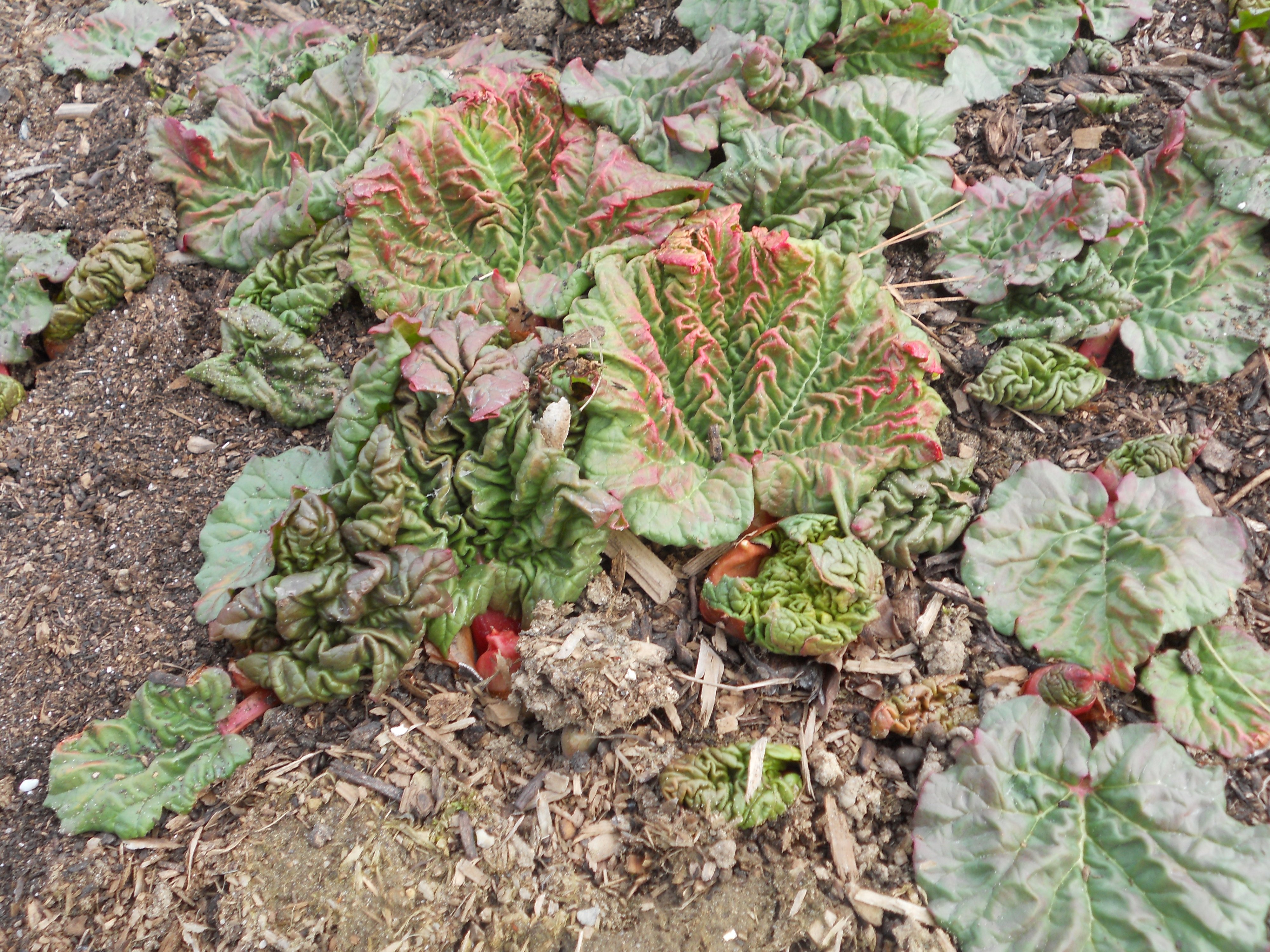
I managed to sneak a little gardening in this past weekend. My two rows of garlic are coming up strong, the rhubarb looks good, and there are at least 6 rows of dirt between them that needed to be refreshed.
The soil in my home garden is much different from the soil in the Hampton Victory Garden. It’s a little on the sandy side as opposed to clay. The soil breaks up easily and I can turn my section of the garden over without a combustion engine. Each year, I add more organic matter to the soil to build it up.
This tool has been in the barn for a while and novice gardener that I am, I thought it might work to prepare my soil.

I turned the dirt and worked in 3 bags of compost. When I was done, Uncle Bob came out to inspect my efforts and quizzed me about my plans. I quickly turned the quizzing around by asking a little sheepishly, “Hey, what is the name of this tool, anyway?”
Uncle Bob kills me. The look of disbelief and disgust on his face was priceless.
“JOO-LIE…it’s a rototiller. It belonged to Dave’s grandfather.”
Duh.
I was glad to know it was a rototiller and not some other exotic gardening device. I was also glad to know it belonged to Dave’s grandfather. Dave is one of Uncle Bob’s good friends; I think they were in the same class in high school. They both played baseball together and then they both worked for the same local oil company. Dave and his wife, “Honey,” always have an outstanding garden at their house. In the cool of summer Sunday evenings, Dave sometimes stops by and sits on the porch with Uncle Bob. Dave is “family” to me.
I’m glad Dave’s grandfather bought this rototiller. It’s getting a little tired and it’s missing half of its tines, but it still does the job and it gives a great “Farm Arm” workout. The best part about this little green machine is that it doesn’t burn any gas.
What type of tools do you use in your garden?
 Julie-Ann Baumer